The daily pressure to post on social media can feel like a relentless treadmill. You know consistency is key, but the last-minute scramble to find something to share often leads to generic posts that fail to connect with your audience. This reactive approach is stressful and ineffective. It’s time to trade that chaos for a streamlined, strategic process.
A social media calendar is more than a schedule; it’s a tool that transforms your social media presence from a chore into a growth engine. It allows you to be intentional, tell a cohesive brand story, and free up valuable mental energy to focus on engaging your community. By planning ahead, you ensure your content is aligned with your business goals and timed for maximum impact. This guide will walk you through five actionable steps to build a social media calendar that truly works for you.
Establish Your Core Content Pillars
Before you can plan your posts, you must define what you talk about. Your content pillars are the 3-5 core themes your brand will consistently discuss. These pillars should directly reflect your brand’s expertise, values, and the needs of your audience. They are the foundation of your content strategy, ensuring everything you post is relevant and reinforces who you are.
For example, a fitness studio’s pillars might be “Workout Tutorials,” “Nutrition Tips,” and “Client Success Stories.” A financial consultant’s could be “Investment Strategies,” “Retirement Planning,” and “Financial Literacy Basics.” These pillars guide your content creation, making it easier to brainstorm ideas. Instead of staring at a blank page, you can simply ask, “What can I create for the ‘Nutrition Tips’ pillar this week?” This framework removes the guesswork and keeps your messaging focused.
Choose Your Tools and Cadence
With your pillars defined, the next step is setting up your operational framework. This means selecting the right tool and deciding on a realistic posting frequency, or cadence. You don’t need complex software; a simple Google Calendar or a spreadsheet can work perfectly. For those who prefer a visual layout, a free Trello board is an excellent option. The best tool is the one you will consistently use.
Once you have your tool, organize it with the essential details for every post. This creates a clear and repeatable workflow. A well-structured calendar entry is the key to an efficient process.
- Content Pillar: The theme this post belongs to.
- Platform(s): Where the post will be published (e.g., Instagram, Facebook).
- Post Copy: The exact text for the caption.
- Visuals: A link to the image/video or a description.
- Hashtags: Your researched list of relevant hashtags.
- Date & Time: The scheduled publication time.
- Status: A simple tracker (e.g., Idea, In Progress, Scheduled).
Next, determine your posting cadence. Remember, consistency trumps frequency. It’s better to share three high-quality posts per week than seven mediocre ones. Assess your resources and your audience. Start small and be consistent.
Master the Art of Batching and Sourcing
Content batching is the practice of creating your social media content for a set period—like a week or a month—in a single session. Instead of trying to be creative on demand every day, you can get into a productive flow state. Schedule a block of time, and focus solely on content creation: write all your captions, design your graphics, and edit your videos. This is one of the most effective productivity hacks for social media management.
Sourcing content also becomes easier with established pillars. Look for inspiration everywhere. Repurpose a section from a blog post into an Instagram carousel. Turn a positive customer review into a graphic. Share a relevant news article on LinkedIn with your expert opinion. Keep a running list of ideas so that when it’s time for your batching session, you already have a wealth of starting points.
Weave in Real-Time Relevance
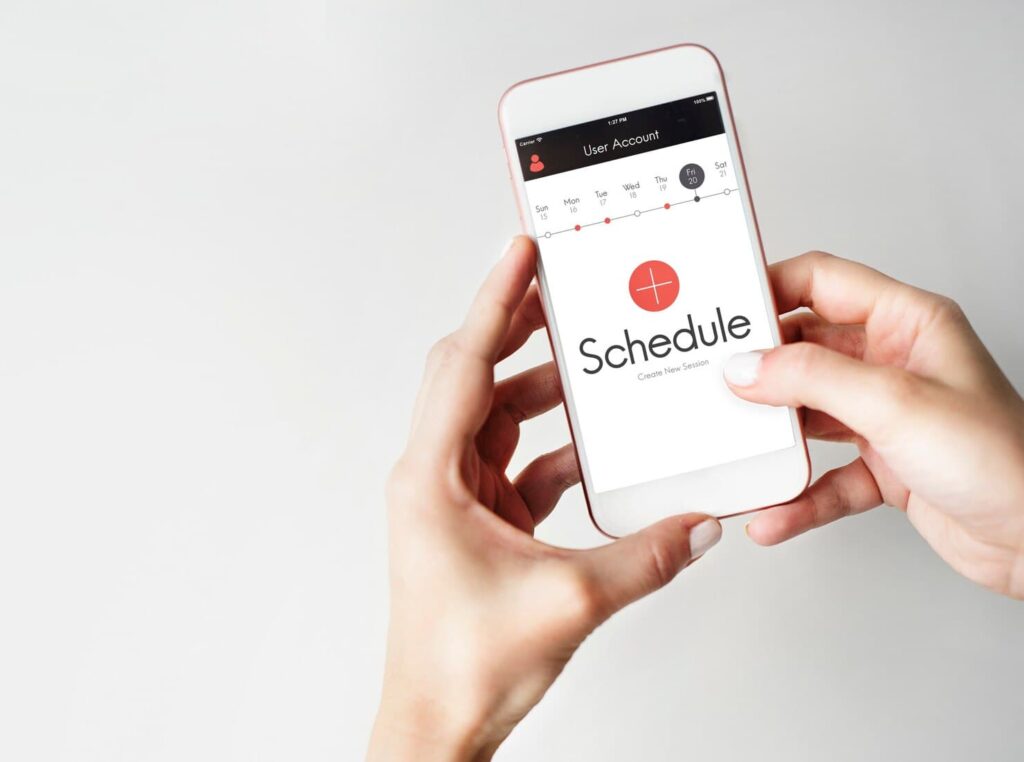
A content calendar should be a guide, not a straitjacket. While most of your content will be planned, it’s crucial to leave room for spontaneity. An overly rigid calendar can make your brand appear robotic and out of touch. The most engaging social accounts blend planned, value-driven content with timely, relevant posts.
A great way to manage this is the 80/20 rule: 80% of your content is planned, while 20% is reserved for flexibility. This allows you to jump on a trending topic, share an impromptu behind-the-scenes moment, or respond to something happening in your industry. This blend of planned and spontaneous content makes your brand feel more human and authentic.
Implement the Review and Refine Loop
Your social media calendar is a living document. The final and most important step is to regularly review your performance and refine your strategy. Set aside time each month to look at your analytics. Focus on what matters: Which posts generated the most meaningful comments and shares? Which content pillar resonated most with your audience? Did video reels outperform static images?
Use these insights to inform your content calendar for the following month. If posts from your “Client Success Stories” pillar performed well, plan to create more. If a certain post type fell flat, analyze why and adjust your approach. This continuous feedback loop of planning, executing, and analyzing is what turns a good social media strategy into a great one, ensuring your efforts become more effective over time.